What Is Food Sensitivity?
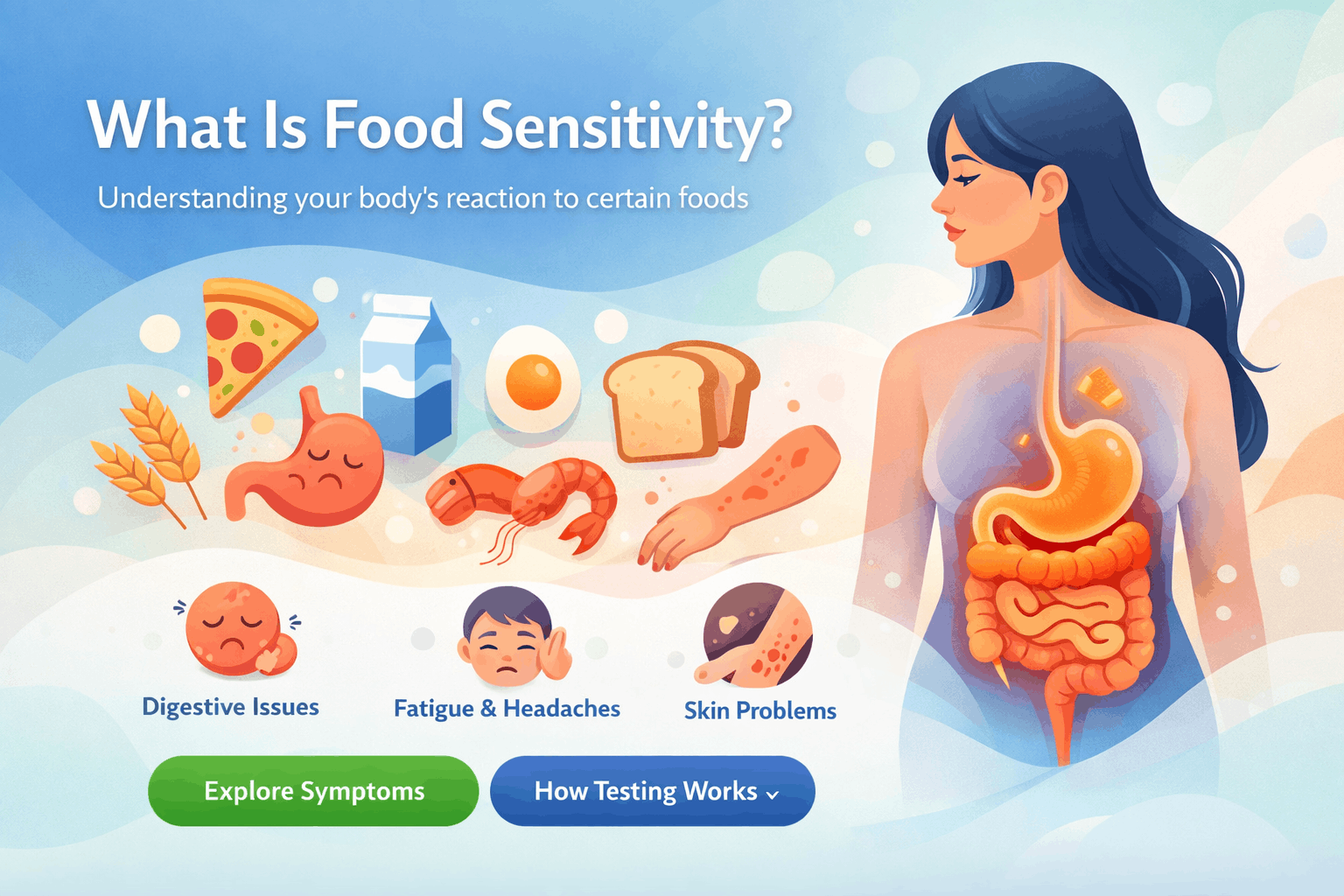
Food sensitivity is a term people often use for delayed, non-IgE food-related symptom patterns. Unlike classic food allergy reactions that can be rapid, sensitivity discussions often focus on symptoms that show up hours later or the next day—making triggers harder to identify.
Often delayed
Symptoms may appear later, which can make cause-and-effect feel confusing.
Multiple systems
People often describe digestive, skin, headache, and energy-related patterns together.
Not the same as allergy
Rapid swelling, breathing difficulty, or severe reactions should be treated as urgent medical concerns.
Food Sensitivity vs. Food Allergy vs. Food Intolerance
These terms are often mixed together online. Here’s the most common way they’re used—so readers can choose the right direction for education and next steps.
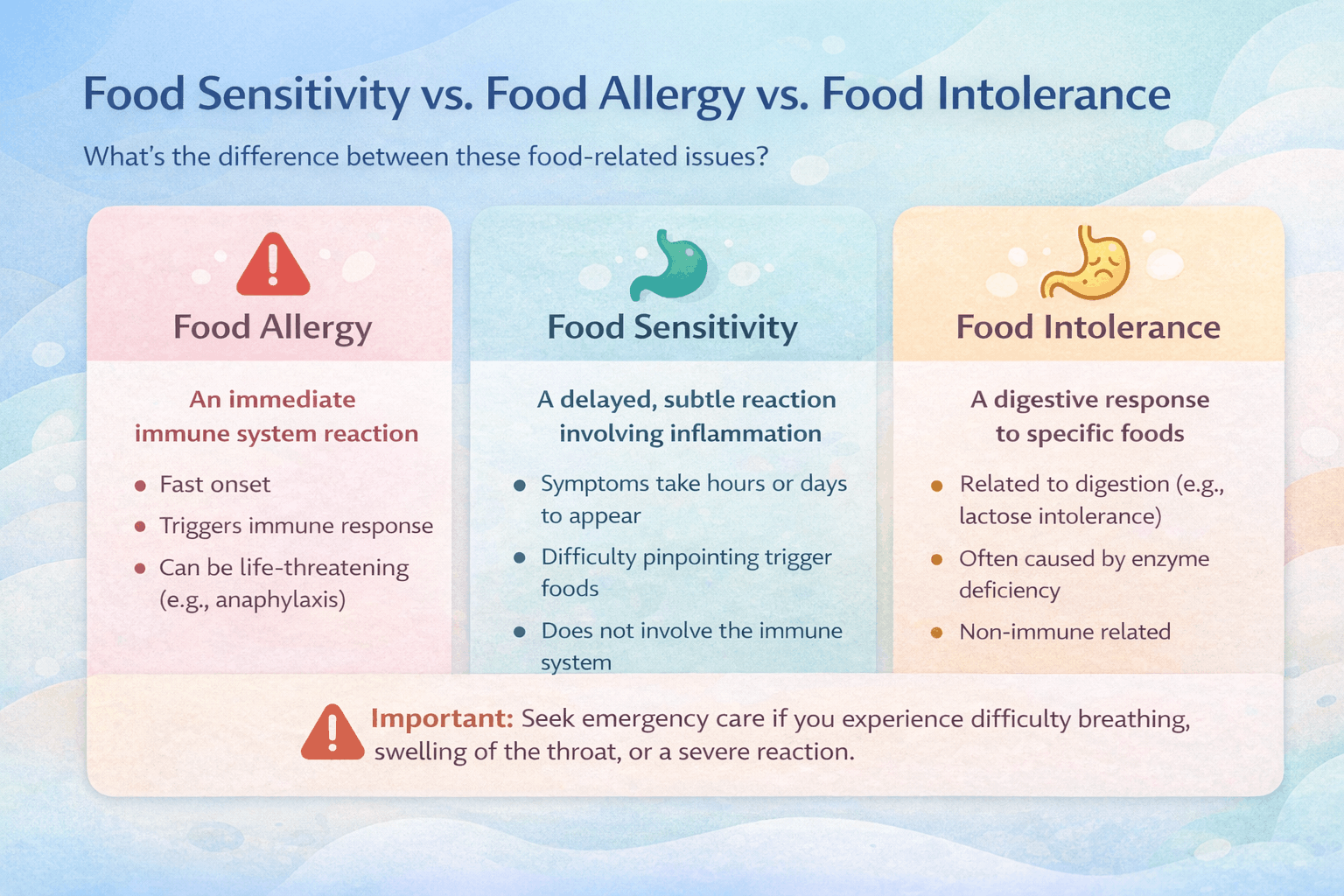
Usually rapid + immune-driven
- Often fast onset (minutes to a couple hours)
- May include hives, swelling, wheezing
- Can be severe; treat suspected reactions urgently
Often delayed + harder to pinpoint
- Symptoms can appear later (hours/days)
- Triggers can be unclear with mixed meals
- Often discussed as non-IgE patterns
Often digestive / enzyme-related
- Frequently GI-focused (bloating, gas, discomfort)
- Common example: lactose intolerance
- Not the same as allergy
Signs You Might Have Food Sensitivity
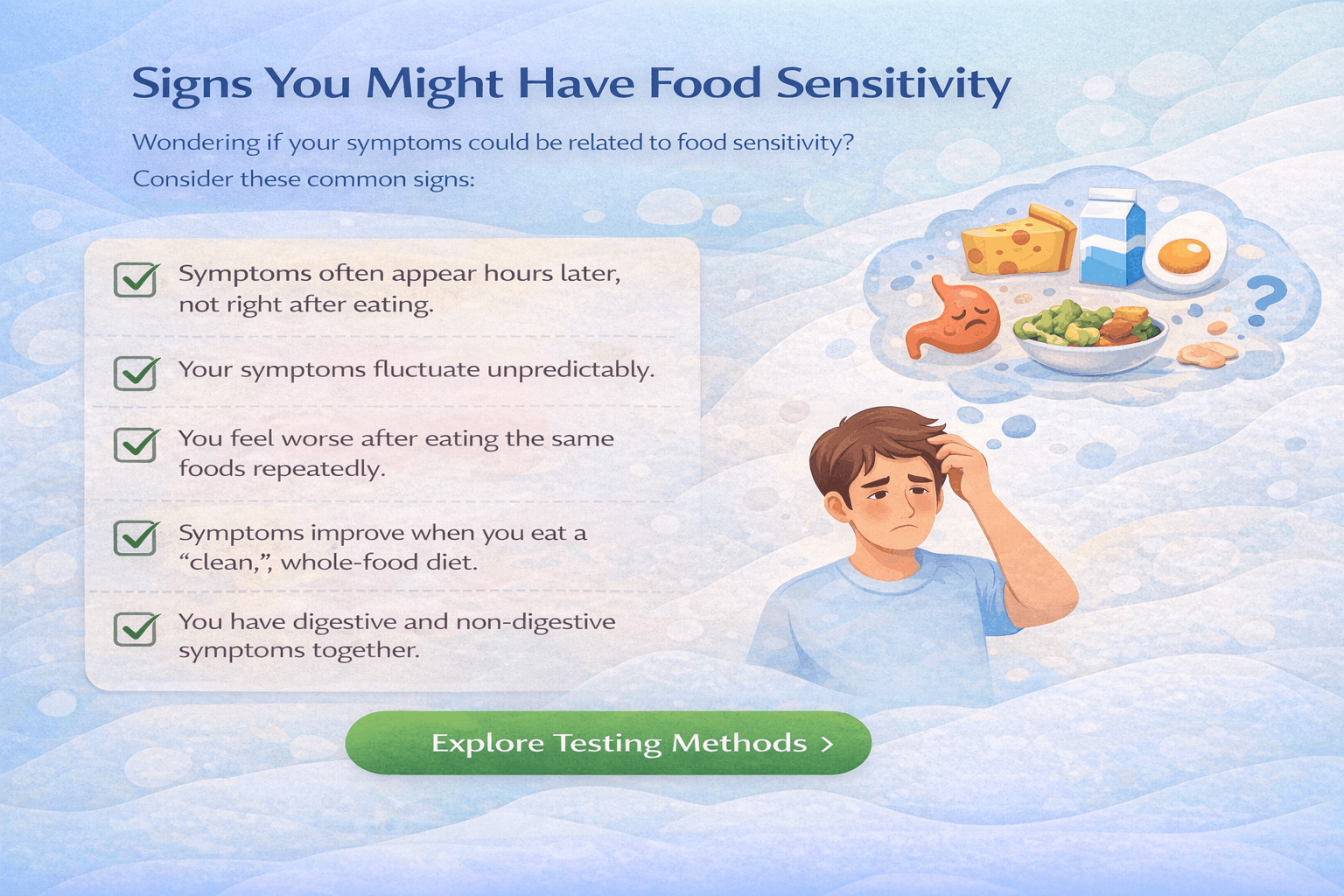
Food sensitivity patterns are often described as delayed and inconsistent. People commonly report that symptoms fluctuate, get worse with repeated exposure, or improve on a simpler “cleaner” diet—though many non-food factors can overlap.
Symptoms show up later
Delayed timing can make triggers difficult to identify without a structured approach.
Symptoms vary week to week
Sleep, stress, hormones, and meal composition can overlap with food-related patterns.
Repeated exposure feels worse
Some people describe worsening symptoms after eating the same foods repeatedly.
How Food Sensitivity Can Affect the Body
People commonly describe symptoms across multiple systems—digestive discomfort, skin changes, headaches, fatigue, and mood-related effects. This is one reason food sensitivity discussions can feel broad.
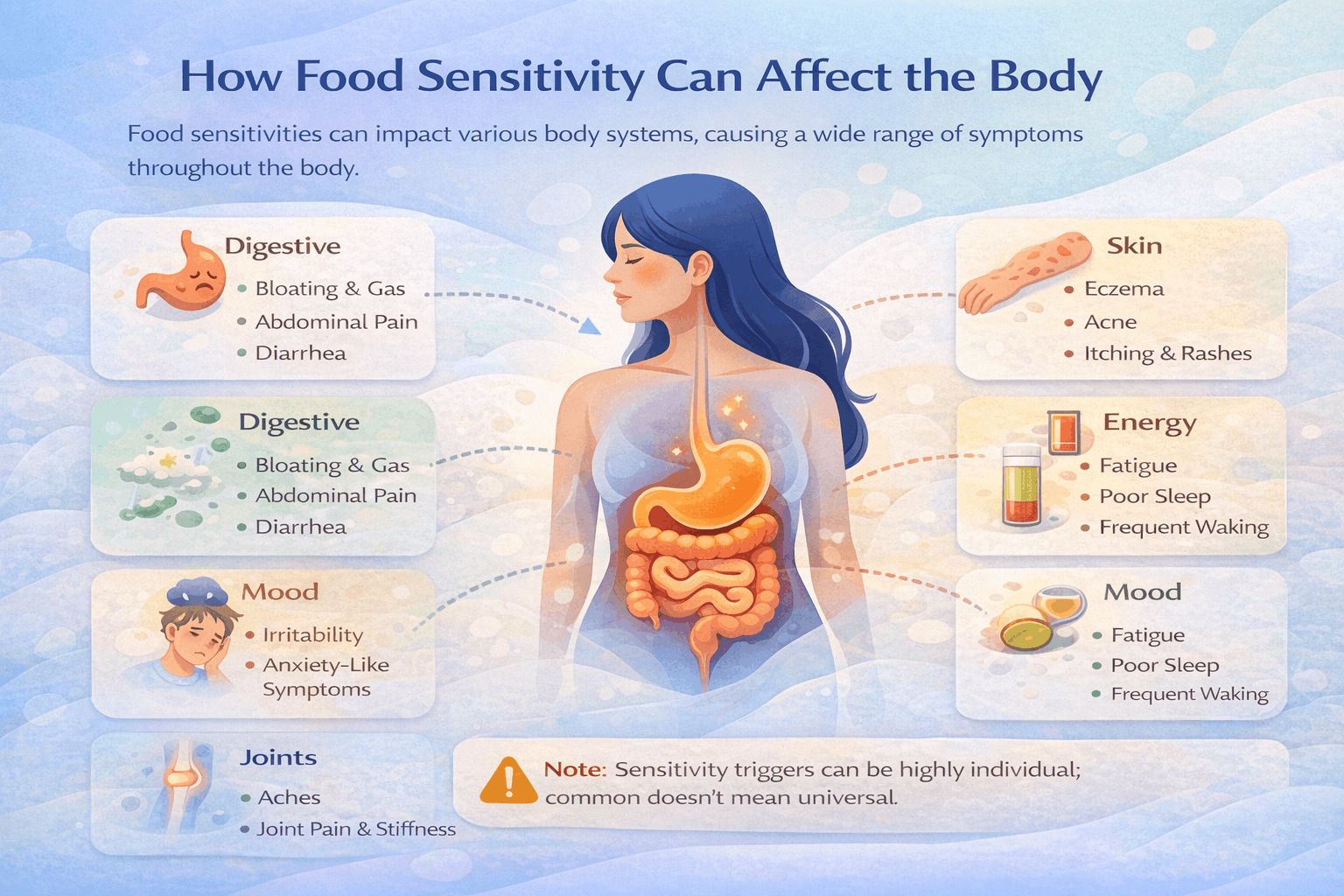
| Category | Commonly discussed examples | Why it can be confusing |
|---|---|---|
| Digestive | Bloating, gas, abdominal discomfort, diarrhea | May overlap with lactose intolerance, FODMAPs, stress, meal size |
| Skin | Itching, rashes, acne-like flare-ups | Skin issues can have many causes unrelated to food |
| Energy / Sleep | Fatigue, poor sleep, frequent waking | Timing and lifestyle factors may blur the trigger |
| Head / Mood | Headaches, irritability, brain fog | Stress and hydration can overlap with food timing |
| Joints | Aches, stiffness | Many non-food factors may contribute |
Why Are Food Sensitivities Hard to Identify?
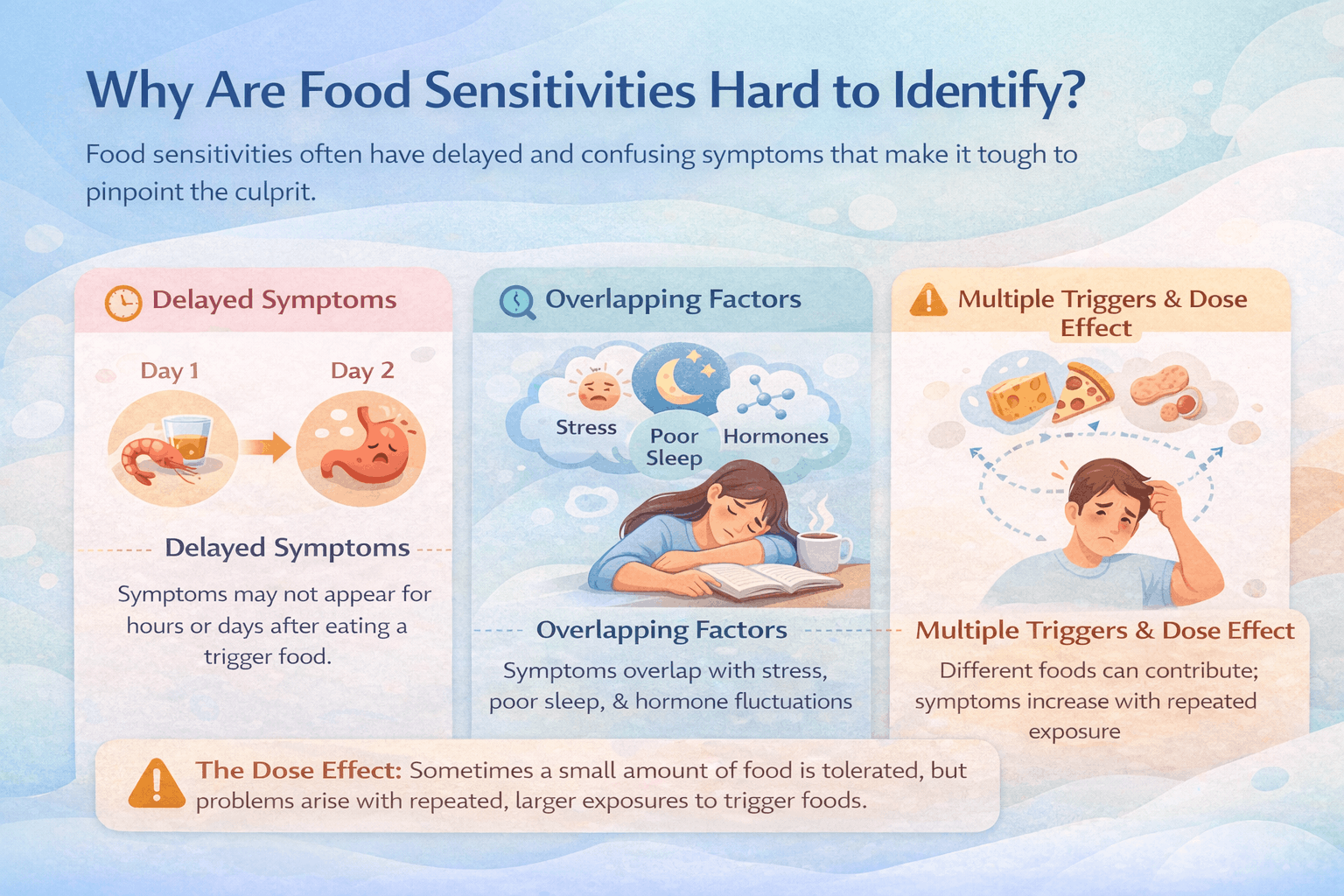
Many people find this topic frustrating because symptoms can be delayed and overlap with everyday factors like sleep, stress, and hormones. Plus, repeated exposures and mixed meals can mask the real pattern.
Not immediate
Symptoms may not appear until later, so the “last thing eaten” isn’t always the trigger.
Sleep / stress / hormones
These can mimic or amplify symptoms, making cause-and-effect harder to confirm.
Meals are complex
Ingredients, additives, and repeated exposure can interact in ways that feel inconsistent.
What Causes Food Sensitivity?
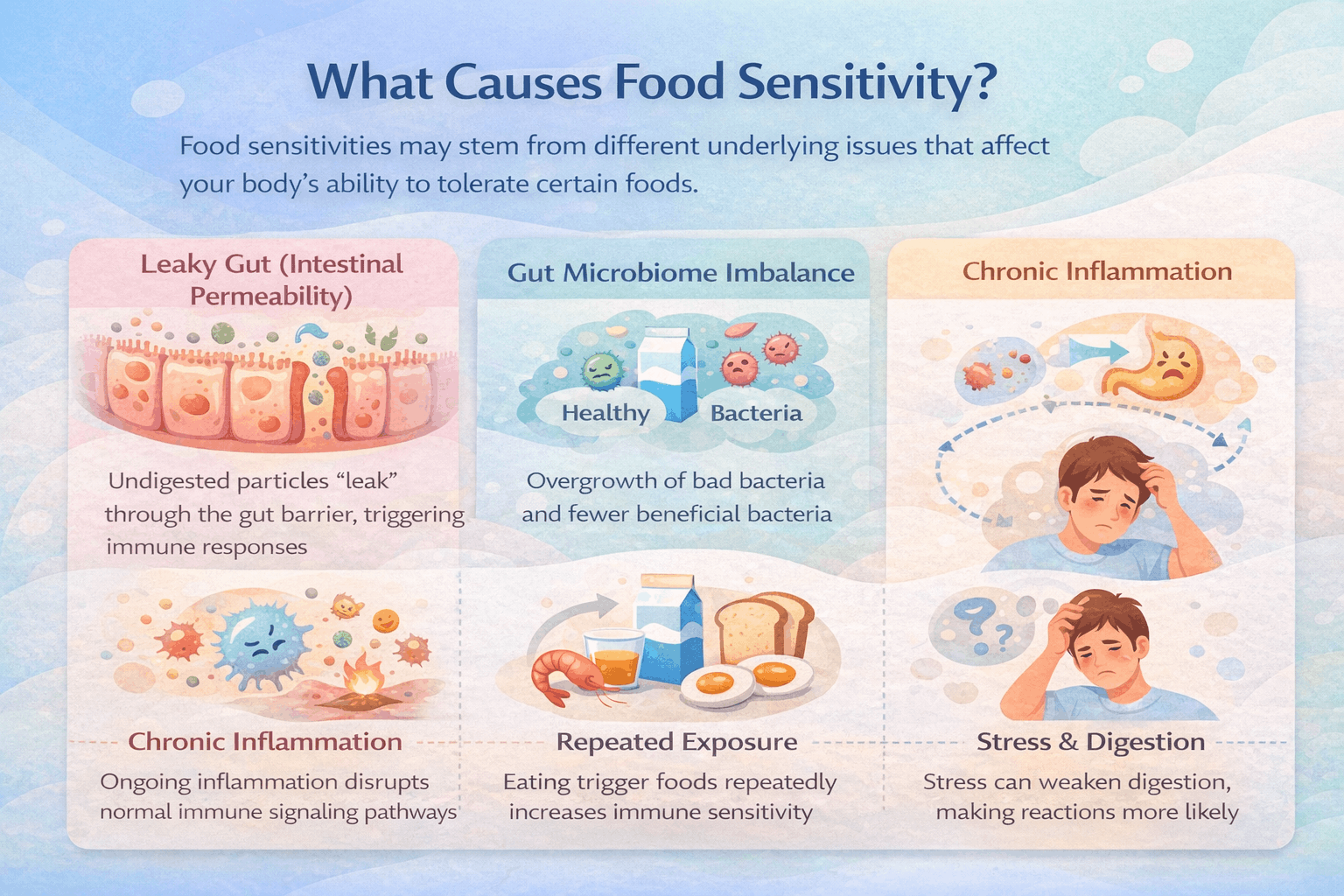
People often discuss food sensitivity in relation to gut health, inflammation patterns, microbiome balance, repeated exposure, and stress-related digestion. These are broad concepts—and they’re not a diagnosis.
Gut + immune signaling themes
- Gut barrier / intestinal permeability (as discussed online)
- Microbiome imbalance concepts
- Chronic inflammation patterns
Focus on repeatable patterns
- Repeated exposure (“dose effect”) may feel more noticeable
- Stress can affect digestion and symptom perception
- Structure helps separate signal from noise
Understanding Food Sensitivity
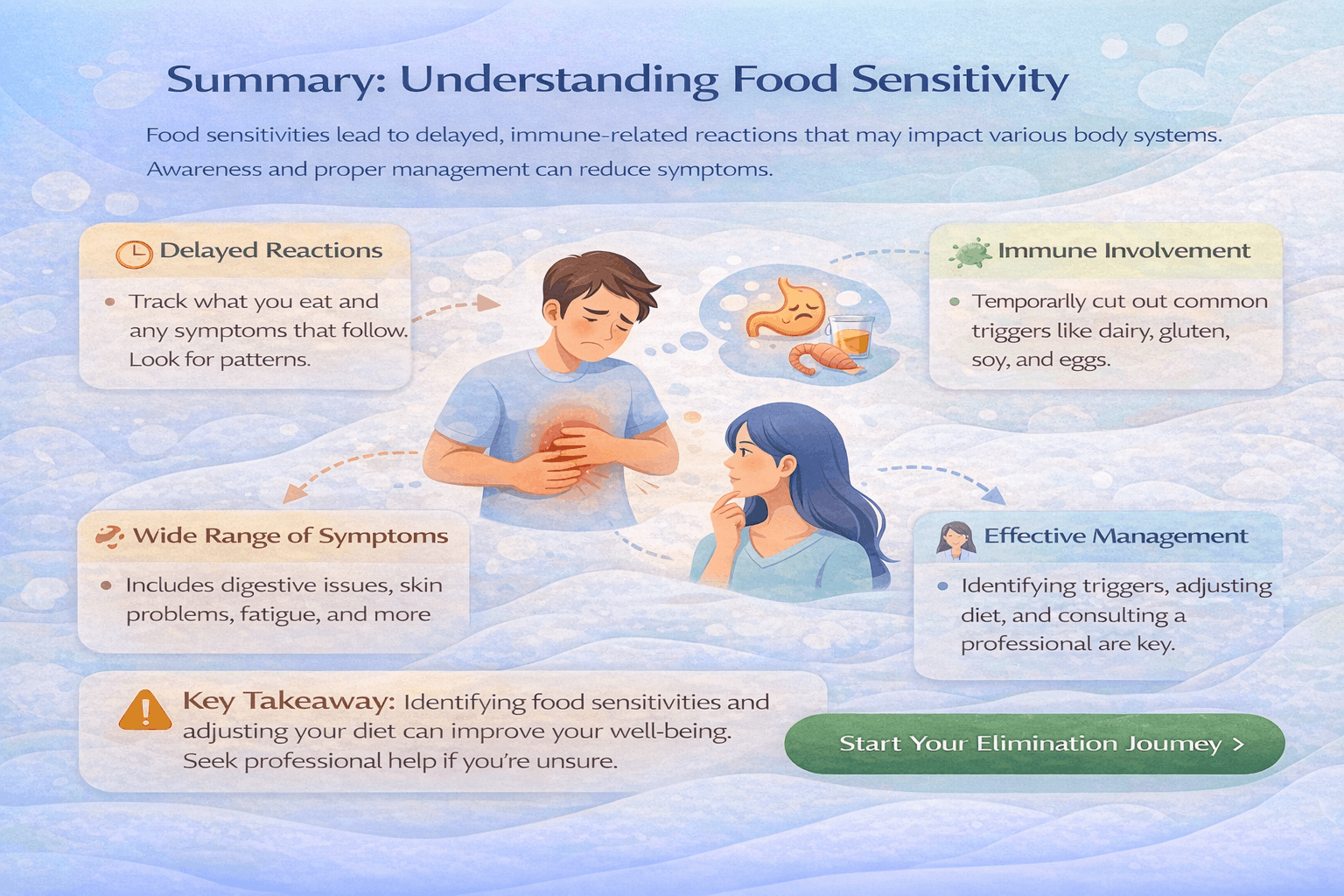
The simplest way to understand food sensitivity discussions is: delayed reactions, broader symptom categories, and the need for structured observation. “Common” triggers aren’t universal, but patterns can emerge with a consistent method.
Timing window matters
Looking at the last 24–48 hours can be more helpful than only the last meal.
Multiple symptom types
Digestive plus non-digestive symptoms are often discussed together.
Structure beats guessing
Tracking, simplifying variables, and consistency help reveal patterns more reliably.
How to Identify Possible Food Sensitivity Patterns
Because symptoms can be delayed and multi-factorial, many people choose a structured method. The goal isn’t perfection— it’s reducing guesswork and identifying repeatable patterns.
A simple, structured method
- Track meals + symptoms with timestamps
- Look for repeated patterns over 1–2 weeks
- Note overlap factors (sleep, stress, illness)
- Prefer simpler meals when trying to learn patterns
What makes results messy
- Changing too many variables at once
- Ignoring delayed timing windows
- Not accounting for repeat exposure
- Expecting one single “culprit” food
How Food Sensitivities Are Diagnosed (In Practice)
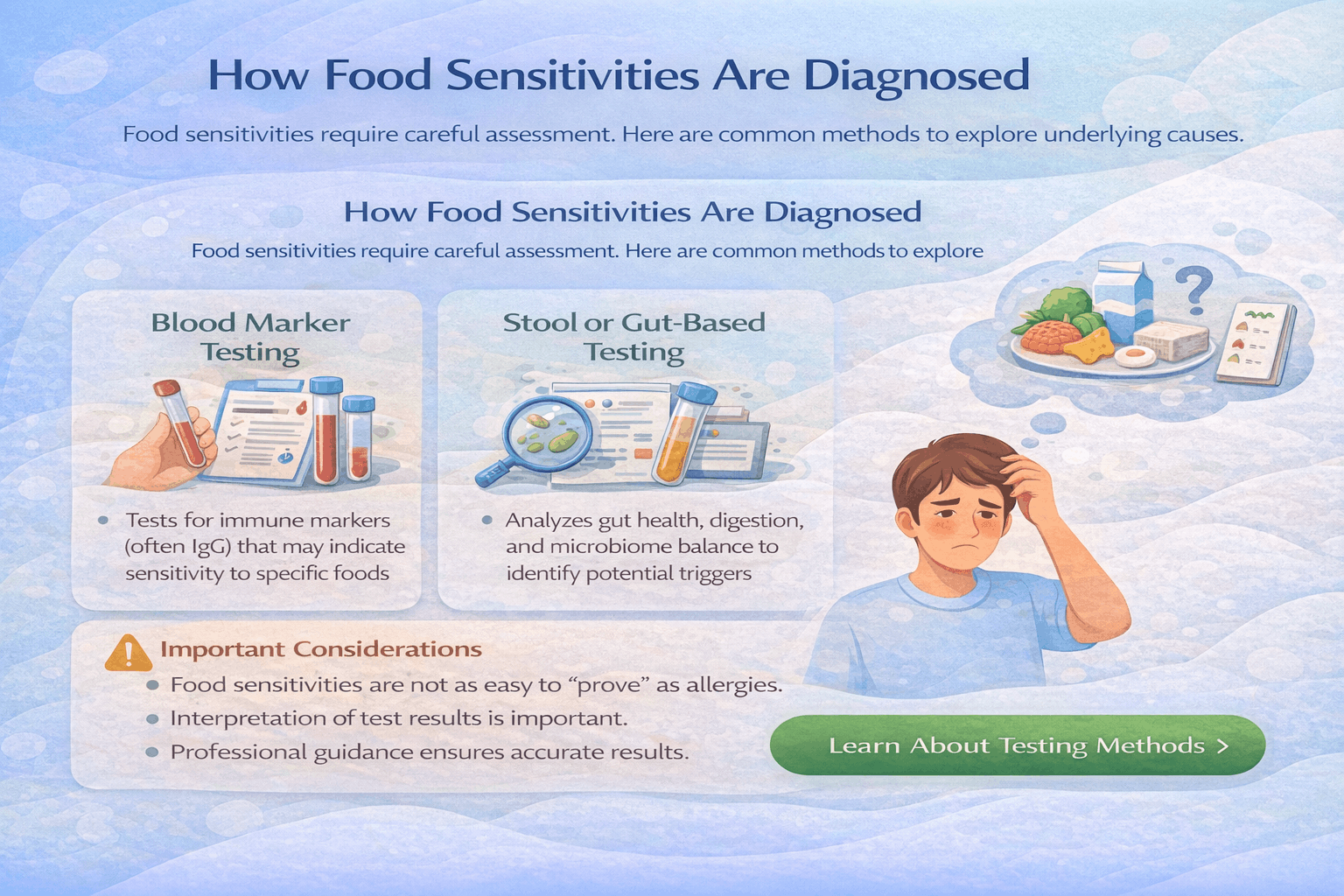
People explore a variety of methods to investigate underlying causes. This section is educational and highlights common categories you may hear about—along with why interpretation matters.
Immune marker panels (context matters)
Some approaches look at immune markers that may be associated with certain foods. Interpretation is important, and results should be considered alongside symptoms and clinical context.
Digestion + microbiome exploration
Some people explore gut-based testing categories to understand digestion, microbiome balance, and potential contributors. These are not always straightforward and may require professional guidance.
Tips for Managing Food Sensitivities
Many people focus on practical habits that reduce uncertainty and help them understand patterns over time. The goal is better clarity, not perfection.
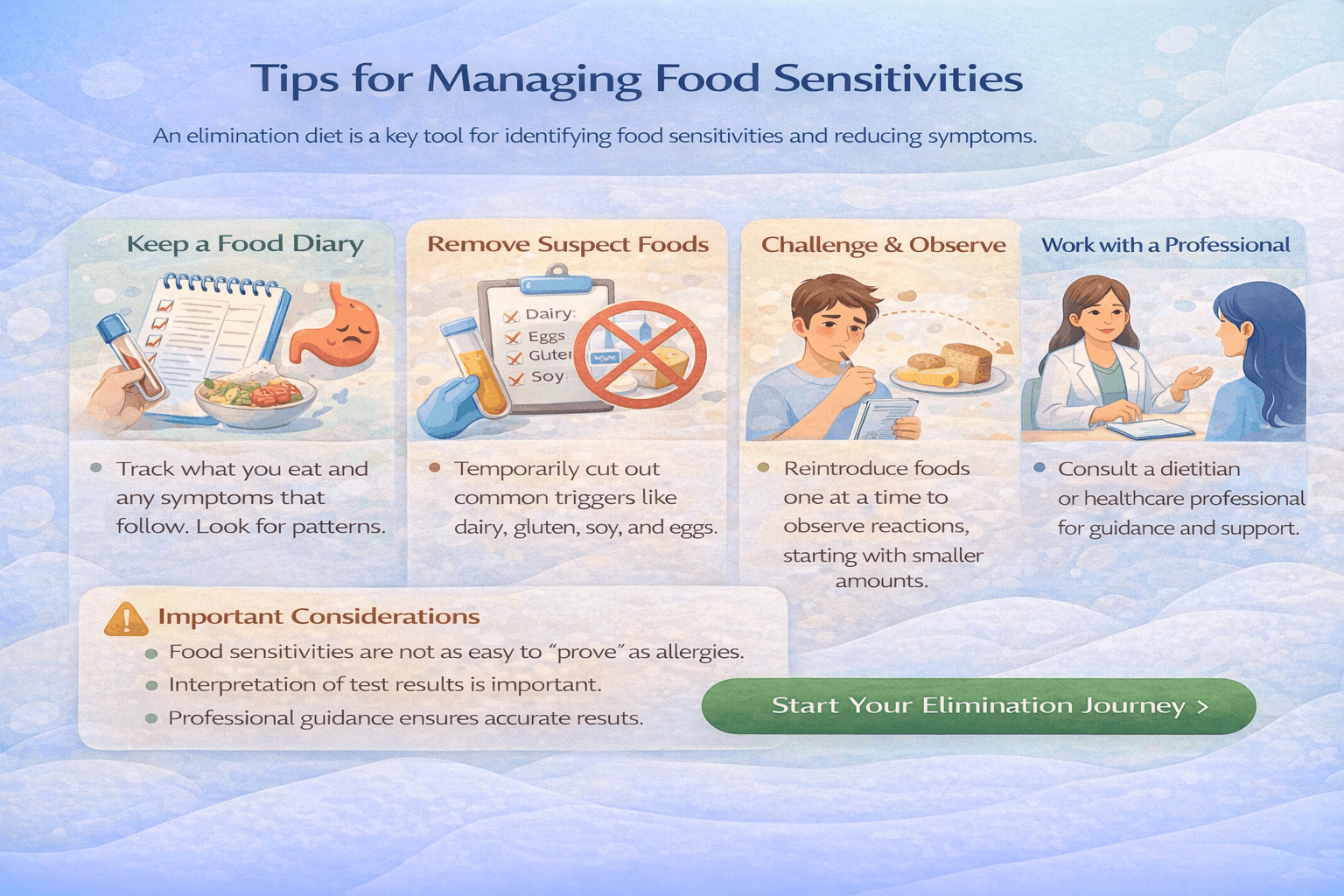
Keep a food diary
Write down meals, symptoms, and timing. Patterns become easier to spot with consistent notes.
Reduce complexity
When exploring patterns, simpler meals with fewer ingredients can be easier to evaluate.
Work with a professional
If symptoms are persistent or confusing, professional guidance can reduce trial-and-error.
Summary: Understanding Food Sensitivity
Food sensitivity discussions usually focus on delayed patterns, a wide range of possible symptoms, and the value of structured tracking. If symptoms are severe or concerning, medical evaluation is important.
Delayed reactions
Symptoms can appear later and feel inconsistent—structure helps reduce confusion.
Wide symptom range
Digestive + non-digestive symptoms may appear together and overlap with lifestyle factors.
Clarity + safety
If symptoms are severe or rapid-onset, treat it as urgent and seek medical care.